Is the prospect of Ukraine recovery receding?
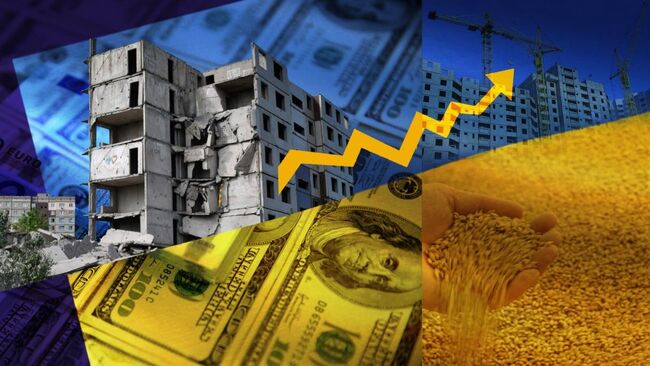
Recent developments on the Ukrainian front seem to have further delayed the prospect of an end to the war and the rebuilding of Ukraine. Businesses have already started planning their participation in this process. However, without an end to the war, companies will not be ready to start new investments in Ukraine.
- After the failure of the Ukrainian counter-offensive in November 2023 and the transition of the initiative on the frontline to Russian troops in early 2024, the prospect of ending the war and rebuilding Ukraine is being pushed further back, and businesses are aware of this.
- Companies with investments in Ukraine are not making investment plans at this stage of the war. Apart from the obvious security issues, it is not profitable to invest in Ukraine as the consumer market has shrunk.
- The main concern of foreign investors is not only the war itself, but also issues such as Ukraine's public procurement system and corruption.
The war in Ukraine, which has been going on for two years now, has gone through different phases from a business perspective. At the initial stage, when the fate of the defence of the Ukrainian capital was at stake, all business activity, except for military and humanitarian aid, was suspended. The most critical was the defence of Kyiv and the repulse of Russia from many previously occupied territories, including Kherson, which was liberated in November 2022.
The period after that, up to the Ukrainian counter-offensive to drive the Russians out of most of Ukraine in the spring and summer of 2023, was a time of waiting. It was during this period that major conferences were held to plan the future recovery of the war-torn country.
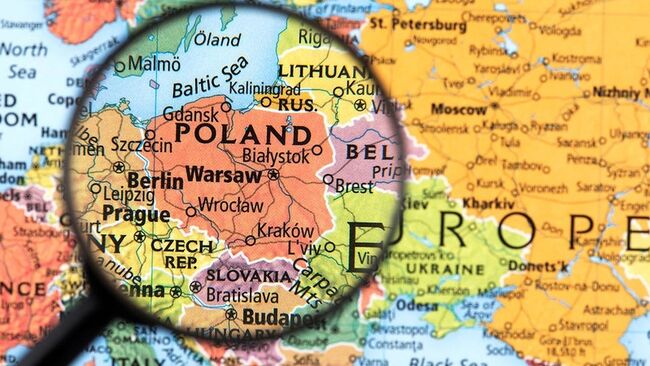
– The previous year had seen a number of conferences dedicated to the future reconstruction of Ukraine – the ReBuild Ukraine exhibition in Warsaw was a landmark event, or Common Future in Poznan, and similar conferences were held in Germany and the UK. They usually brought together representatives of the government, NGOs and businesses from different countries interested in participating in Ukraine's post-war recovery. I don't think this trend will be actively continued this year, – Sylwia Krason-Kopaniarz, Managing Director of International Development at Impel Group and CEO of Impel Ukraine, told WNP.PL.

Businesses have realised that the conflict in Ukraine will last for many more years
The failure of the counter-offensive in November 2013 and the "freezing" of the front line, as well as the seizure of the initiative by Russian troops in early 2024, made business representatives realise that the conflict in Ukraine, even if it ends in a victory for Ukraine, will be long-lasting and destructive for the Ukrainian economy.
– Today, the view of this conflict has changed a lot, and absolutely everyone understands that we are talking about a "marathon" in which the finish line is not even visible. It is not known when and how this war will end. After the Russians were driven out of Kyiv in the first weeks of the war, it seemed that this conflict should end with a victory for Ukraine, which, with the support of the United States and the European Union, would defeat Russia. Unfortunately, after two years of war, the situation looks much less optimistic: Ukrainians are tired of the war, they have big problems with conscription, the US has suspended its aid, there is growing dissatisfaction with the government, and there is growing concern about whether Ukraine will remain within the same borders as before the war, – said the Impel representative.
There will be no major investments in Ukraine until the war is over
– At the moment, there are companies in Ukraine that were already here before the war started – as part of the support they wanted to show to Ukraine, on the one hand, by keeping jobs, and on the other hand, because it is impossible to close overnight when you have significant investments in a particular market. The companies that have remained are trying to work as best they can under certain conditions, and they will remain there, trying to adapt, – said Sylwia Krason-Kopaniarz.
Western companies are making "small" investments in Ukraine to be the first to enter the market after the war
The second group, according to Impel's representative, is made up of companies that export and import various goods, i.e., day-to-day economic activities that are regulated by supply and demand.
– Most suppliers to the Ukrainian market try to work on a prepayment basis or with bank guarantees. The third group is made up of potential investors who are counting on the prospect of the country's recovery. Investment funds are ready to allocate a relatively small amount, for example, USD 1 million, which they can invest in the Ukrainian economy, knowing, however, that they may never get this money back. On the other hand, private investors can start a project to build a large plant, but business is pragmatic and, as practice shows, the volume of investment is unlikely to go beyond the planning and design phase until there is a clear prospect of an end to the war, – emphasised Sylwia Krason-Kopaniarz.
In her opinion, by taking the risk of investing in Ukraine during the war, companies hope to gain a competitive advantage after it ends, as they will be the first to occupy their market niches.
The main concerns of foreign investors are not only related to the war itself, but also to issues such as the public procurement system.
– Ukraine's public procurement system is disastrous, and without changes in its functioning, no investor outside the military sector will invest in Ukraine, regardless of whether they want to invest in the east of the country or near the Polish border. "Investments require 100 per cent guarantees, which are currently not available in Ukraine," – said Dariusz Blocher, president of the construction company Unibep.
In addition, Ukraine, from the perspective of foreign and domestic businesses, is still a country that struggles with severe corruption.
– Ukraine is a market of serious challenges associated with phenomena that make it difficult to do honest business – both for foreign investors and Ukrainian entrepreneurs, – said Dariusz Górczynski, Director of Network Development at Plastics-Ukraine.
In addition to security issues in Ukraine, another obstacle for investors is the shrinking investment market
Companies with investments in Ukraine are not making investment plans at this stage of the war. In addition to security issues, it is not profitable to invest in Ukraine due to the shrinking consumer market.
– In Lviv, a 5,000 sq m workshop burned down, which is a third of the plant that was located there. We are still working in the part of the plant that did not burn down, because of the decrease in orders caused by the war, which is enough for now. When the time comes to rebuild Ukraine, we will also think about restoring the burnt-out shop, – said Fakro CEO Ryszard Florek in an interview with WNP.PL.
The war resulted in a reduction of the Ukrainian market in some sectors by up to 50 per cent. Especially at the beginning of the war, this level returned to normal later. The Ukrainian economy suffered the greatest losses in the first period. It was then, among other things, that Kyiv lost the Azovstal steel plant in Mariupol, which was key to its production. An additional factor in the sharp decline of the Ukrainian economy was the loss of the Black Sea ports, which were the "main gateway" for the Ukrainian economy's trade on world markets. Before the outbreak of the full-scale war, up to two-thirds of exports were carried out by sea.
According to Sylwia Krason-Kopaniarz, a significant trend in the facility management services sector in Ukraine over the past 2 years has been a significant reduction in market potential.
– In my opinion, the market has shrunk by 40 to 50 per cent compared to the pre-war period, but is now holding more or less at the same level. The biggest decline was seen in the first six months after the Russian invasion, as Mariupol was virtually levelled to the ground at that time, along with one of Ukraine's largest steel mills, Azovstal, and the entire mining industry in eastern Ukraine was severely affected. It should be borne in mind that it was the east of Ukraine that generated a large potential for FM outsourcing, mainly metallurgy, energy and mining, and these sectors of the economy were heavily affected by the fighting and reduced their orders or refused to purchase services at all, – said the Impel representative.
Source: WPN.PL